Redefining the kitchen journey across digital tools, specialist advice and stores.
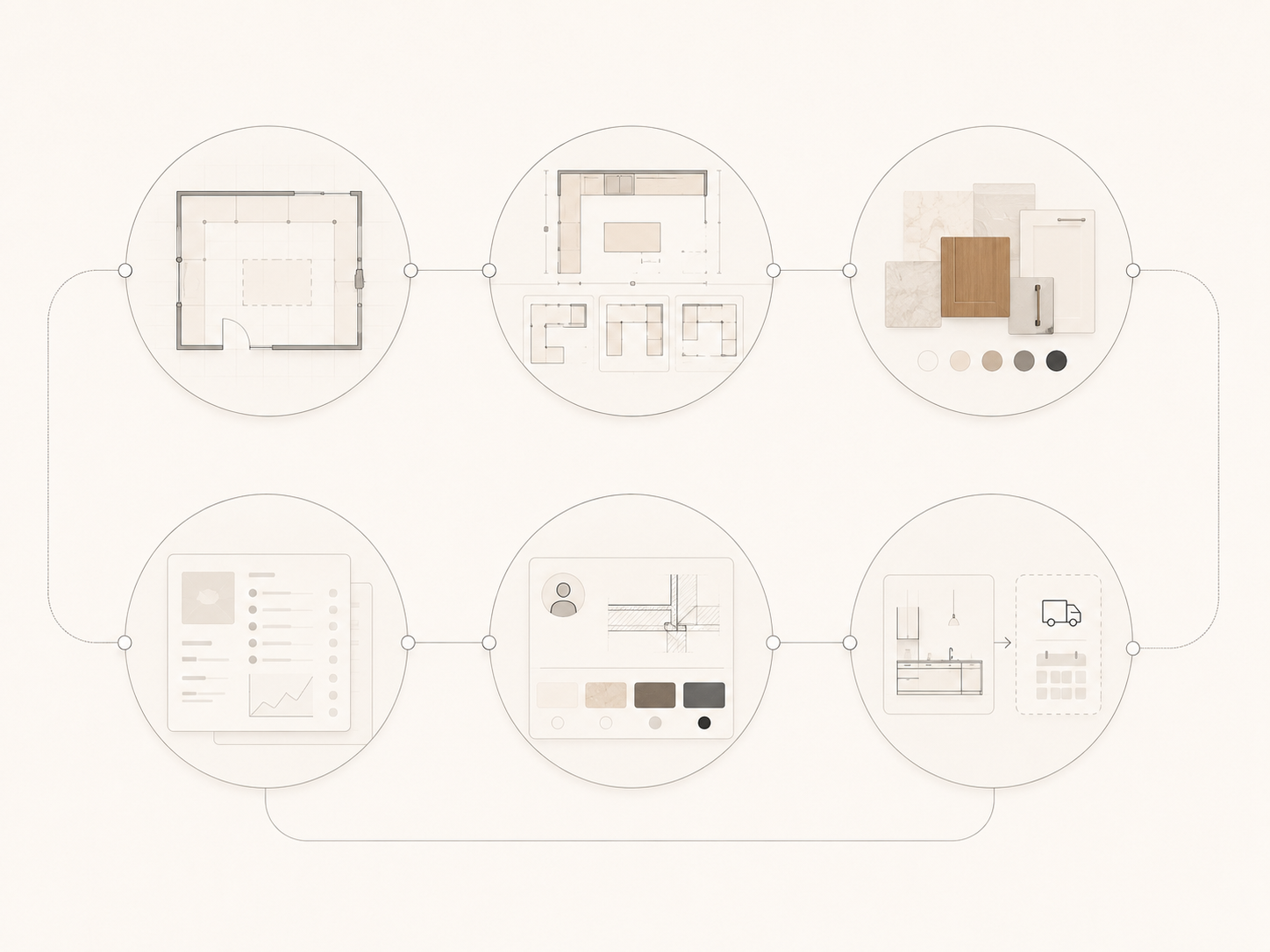
Buying a kitchen is not a single transaction. It is a high consideration journey that combines inspiration, planning, measurement, specialist advice, design, budgeting and purchase across digital and physical channels.
Leroy Merlin needed a clearer understanding of how customers moved through that service, where information was lost and how its tools, specialists and stores could work as one connected experience.
I led research and experience definition across the journey, translating customer evidence and operational knowledge into a shared service model, experience principles and product opportunities.

The service challenge
Customers experienced one kitchen project, but the organisation delivered it through multiple disconnected moments.
A kitchen project develops over time. Customers explore ideas, compare options, measure their space, create plans, speak with specialists, adjust decisions, review budgets and eventually commit to a significant purchase.
The journey repeatedly moved between digital tools and physical stores. Information gathered in one moment did not always remain visible or useful in the next.
What appeared as isolated usability problems often reflected a wider service issue: customers were expected to maintain continuity across tools, conversations and decisions that were managed separately inside the organisation.
Maintain confidence and continuity throughout a long and unfamiliar decision process.
Losing information and context when moving between channels, tools and specialists.
Create one shared understanding of the complete journey and identify where product and service changes could reduce fragmentation.
- Inspiration
- Initial exploration
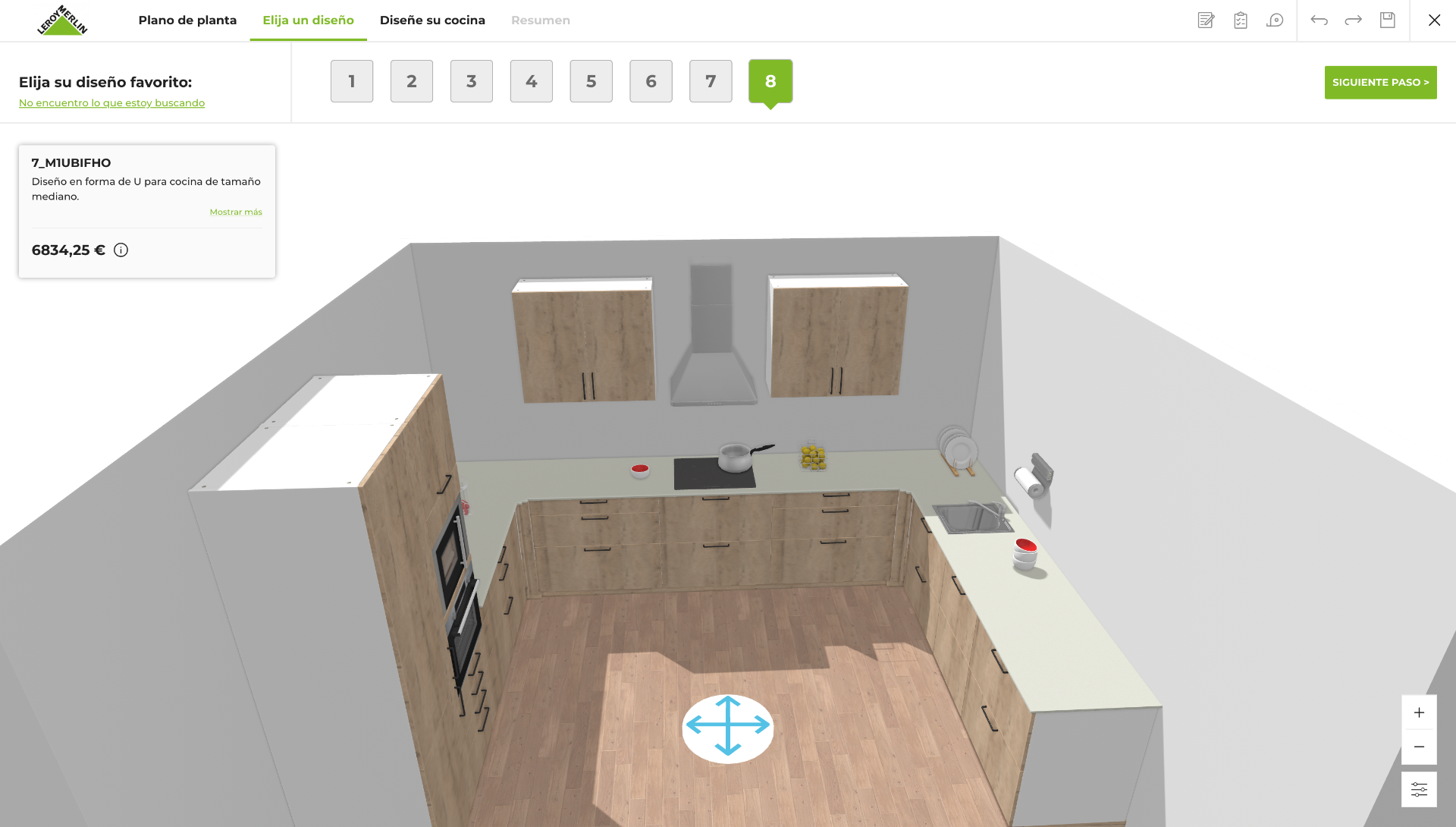
- Kitchen planning
- Measurement
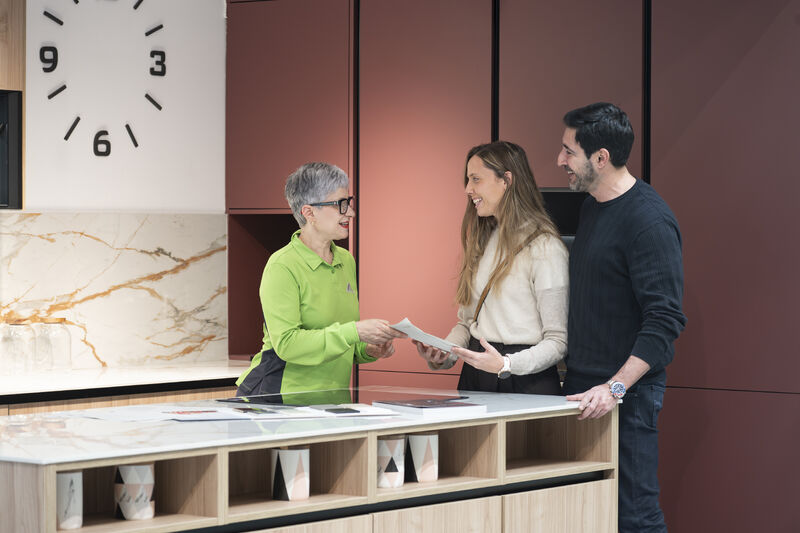
- Specialist consultation
- Design refinement
- Budget review
- Purchase decision
- Delivery and installation preparation
Research direction
The research needed to explain the service, not only evaluate individual interfaces.
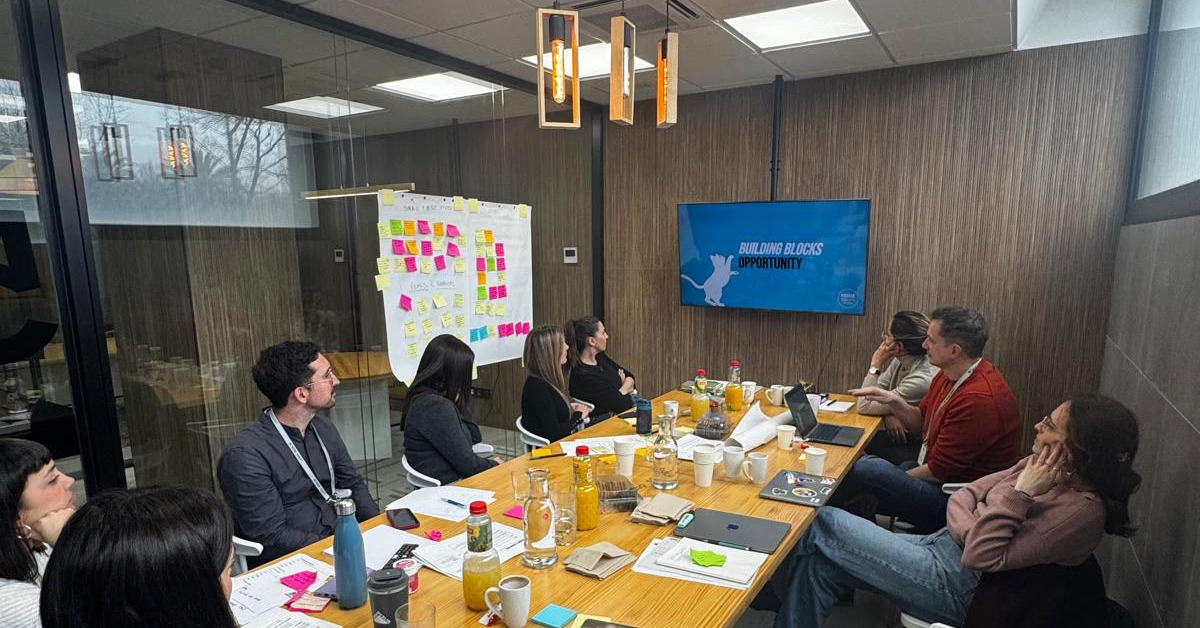
The work combined usability testing, observation, interviews and collaborative analysis with teams involved in the kitchen experience.
Fifty usability tests provided evidence about how people understood the tools, where they hesitated and which information they needed before making decisions.
Research with specialists and internal teams added the operational perspective. It revealed where customer expectations, tool behaviour and store processes did not match.
The synthesis moved beyond a list of usability issues. It created a shared model of the decisions customers were trying to make and the support they needed at each stage.
Behaviour, questions, uncertainty and decision needs.
Specialist roles, handovers, operational constraints and store practices.
Tool behaviour, information gaps, duplicated effort and broken continuity.
- Usability sessions
- Annotated observations
- Specialist interviews
- Journey mapping material
- Decision clusters
- Cross channel patterns
Product and service direction
Three decisions created a clearer direction for the kitchen experience.
Design around customer decisions, not organisational channels.
Customers did not think in terms of website, planning tool or store department. They were trying to make a sequence of connected decisions about space, layout, style, products, budget and feasibility.
Organising the experience around channels made the customer responsible for connecting those decisions.
I reframed the journey around what people needed to understand and decide at each stage. This created a shared structure that could be used across digital tools, store interactions and specialist support.
Trade offA decision based model challenged existing channel boundaries, but created a clearer foundation for continuity across the service.
- Can this work in my space
- What configuration is right
- What products and materials should I choose
- What will it cost
- What needs specialist validation
- What happens next
Preserve context across digital and physical interactions.
Every transition between self service tools and specialist support created a risk of losing information.
Customers could arrive at a consultation with ideas, measurements or plans that were difficult to recover, interpret or continue. Specialists then needed to reconstruct context before moving the project forward.
I defined continuity as a core service principle. Plans, decisions, constraints and next actions needed to remain visible as the customer moved between tools, appointments and store conversations.
Trade offCreating continuity required coordination across products and operations, but reduced the need for customers and specialists to repeatedly reconstruct the project.
- Customer exploration
- Saved project information
- Specialist consultation
- Design refinement
- Updated proposal
- Next action
Use specialist support where confidence matters most.
The research showed that customers valued autonomy, but not at every moment of the journey.
Digital tools were useful for exploration and preparation. Specialist support became most important when customers needed to validate feasibility, resolve uncertainty or commit to a significant decision.
The direction was not to replace expert advice with self service. It was to clarify where each form of support created the most value and make the transition between them more deliberate.
Trade offIncreasing digital autonomy could not come at the cost of confidence in complex or high risk decisions.
- Inspiration
- Initial exploration
- Basic planning
- Measurement validation
- Technical feasibility
- Design refinement
- Budget confirmation
- Purchase commitment
My direction
My role was to turn distributed evidence into a shared direction for product and service teams.
My responsibility extended beyond conducting research or documenting the current journey.
I structured the research approach, connected evidence from customers and internal teams, and helped the organisation distinguish individual usability problems from wider service issues.
I translated the findings into a shared journey, experience principles and prioritised opportunity areas that could guide product, store and specialist decisions.
The value of the work was creating a common language around the customer journey so teams could evaluate changes against the complete service rather than optimise isolated moments.
- Research direction
- Usability testing approach
- Qualitative synthesis
- Journey modelling
- Experience principles
- Opportunity definition
- Product and service recommendations
- Stakeholder communication
- Customer needs
- Digital product behaviour
- Specialist workflows
- Store operations
- Business priorities
- Channel dependencies
- Product teams
- Design teams
- Kitchen specialists
- Store teams
- Business stakeholders
- Research participants
- Customer behaviour
- Operational knowledge
- Research patterns
- Journey model
- Experience principles
- Prioritised opportunities
- Product and service direction
The experience model
The journey became a connected service rather than a sequence of isolated touchpoints.
The final model described how the service should support customers from early exploration to purchase preparation.
It did not prescribe one interface. It established the continuity, information and support the complete experience needed to provide.
Project information and decisions should remain available across tools, appointments and store interactions.
Customers should understand what has been completed, what remains open and what needs to happen next.
Technical constraints, costs and decisions should become clearer as commitment increases.
Self service and specialist advice should appear according to the complexity and risk of the decision.
- Explore
- Prepare
- Plan
- Validate
- Refine
- Decide
Product opportunities
The strategy translated into focused opportunities across the journey.
Four opportunity areas connected the research evidence to concrete product and service decisions. They are presented as direction, not as launched features.
Create a persistent kitchen project.
Give customers and specialists access to the same evolving project, including measurements, plans, selected products, preferences, budget considerations and open decisions. Purpose: reduce lost context and repeated effort across interactions.
Clarify progress and next actions.
Show customers where they are in the journey, which decisions have been completed and what needs to happen before the project can move forward. Purpose: reduce uncertainty in a long and unfamiliar process.
Prepare consultations before the appointment.
Help customers gather the relevant information before meeting a specialist and give specialists enough context to make the session more productive. Purpose: use expert time for decisions rather than reconstruction.
Connect planning tools with specialist validation.
Allow ideas created through self service tools to become a meaningful starting point for technical review and design refinement. Purpose: create continuity between digital autonomy and professional support.
What changed
A fragmented journey became a shared model for product and service decisions.
Fifty usability tests and qualitative research revealed how customers made decisions across the complete kitchen journey.
Digital tools, stores and specialist support were represented as parts of one connected experience.
Research findings became experience principles and prioritised opportunities rather than an isolated list of usability issues.
Teams gained a common framework for discussing continuity, progress, confidence and specialist support.
The strongest evidence from this stage is the shared journey, the prioritised opportunity model and the clearer connection between customer needs, product behaviour and service operations.
What Leroy Merlin changed in how I lead.
Leroy Merlin reinforced that a complex service cannot be improved by optimising each channel independently.
The most important work was identifying the decisions customers were trying to make and clarifying how digital products, specialists and stores could support those decisions together.
I would preserve the depth of the research, but introduce the shared decision model earlier so synthesis and stakeholder conversations could converge sooner.
The project made me more deliberate about using research not only to describe behaviour, but to create a direction that product and service teams can act on.
Next case
Making trust easier to understand and use.
At Zertiban, the challenge shifted from a complex retail service to a regulated product where identity, consent, security and usability needed to work together.
Explore Zertiban